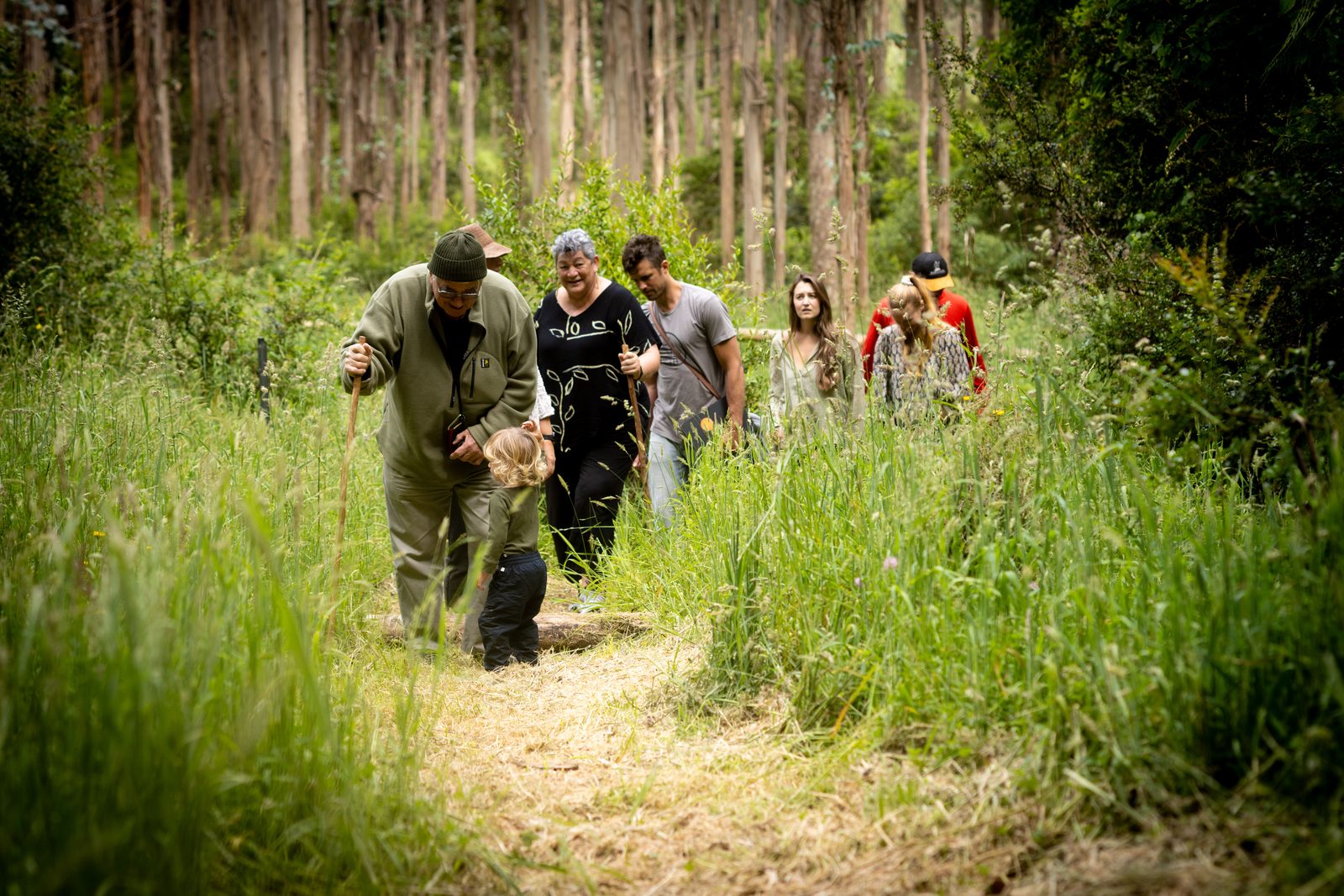
There is a food most of us walk past every day without ever thinking to eat it. It falls on footpaths and gets crushed under tyres each autumn. It once fed whole civilisations. It is the acorn.
Eric Cairns would like us to remember that. Eric is a career scientist in his mid-seventies who has spent the better part of the last decade working with oaks — improving them for timber, yes, but also, wearing his New Zealand Tree Crops hat, looking hard at the acorn as a food we have quietly forgotten. He is now lending that lifetime of knowledge to our Fruit & Forage Loop.
“Some historians call the oak the frame of civilisation,” Eric says, borrowing the title of William Bryant Logan’s book. Early societies leaned on the oak twice over: its timber built their houses and their ships, and its acorns fed them — directly, or through the pigs and deer that fattened on the mast beneath the trees.
A staple we forgot
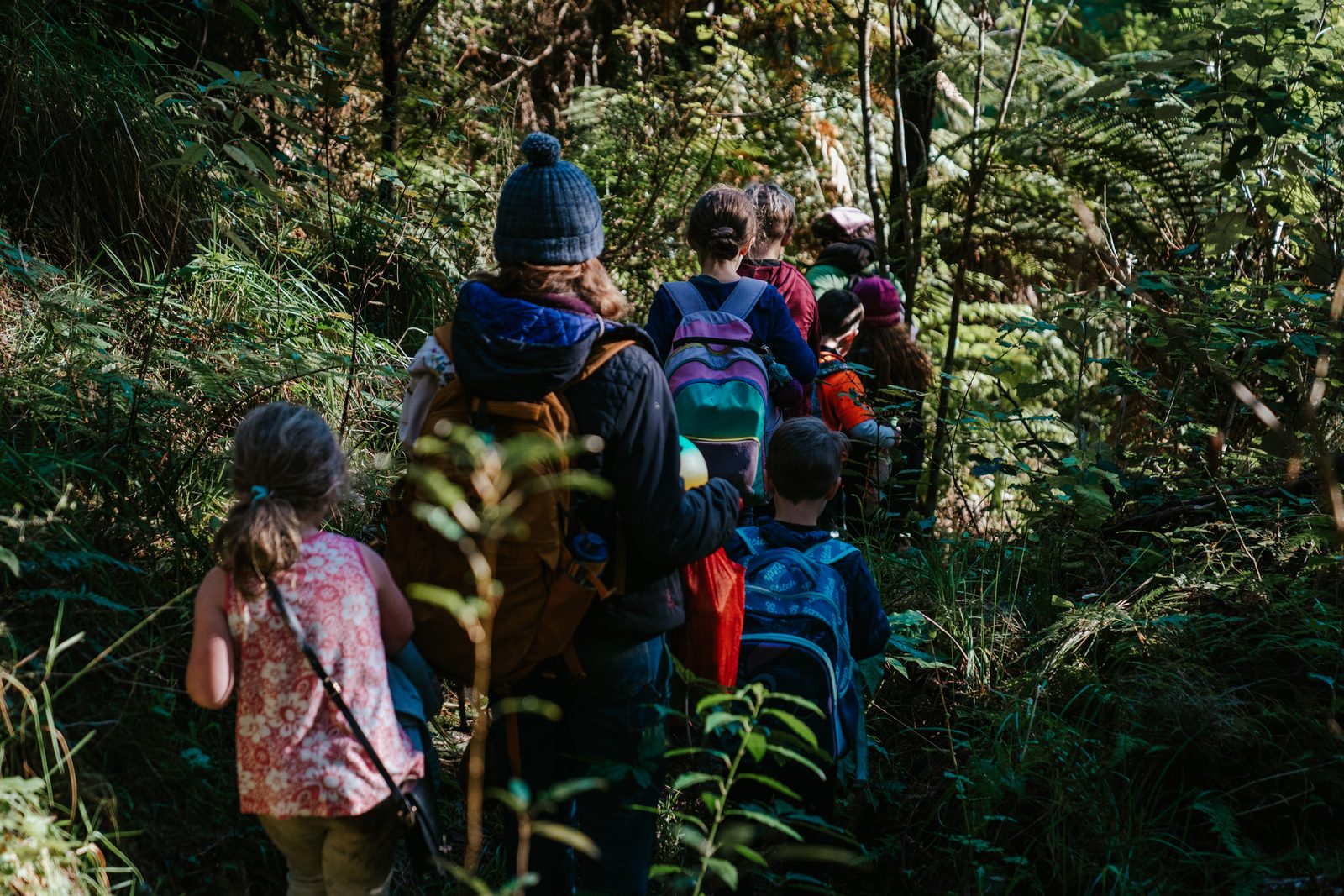
Acorns never really went away. “There are still societies around the world that never stopped eating them,” Eric notes — and as recently as the early 1900s, some American Indian tribes drew as much as half their diet from acorns. (Marcie Mayer’s book Eating Acorns is a good place to start if you want to fall down this particular rabbit hole.)
They are worth the trouble. Acorns are nutritious — full of protein, carbohydrate and good fats. The only catch is the tannins, which have to be leached out in water before you can eat them. It sounds fiddly, but it isn’t really: as Eric points out, plenty of the everyday grains on our shelves need far more processing before they reach the plate.
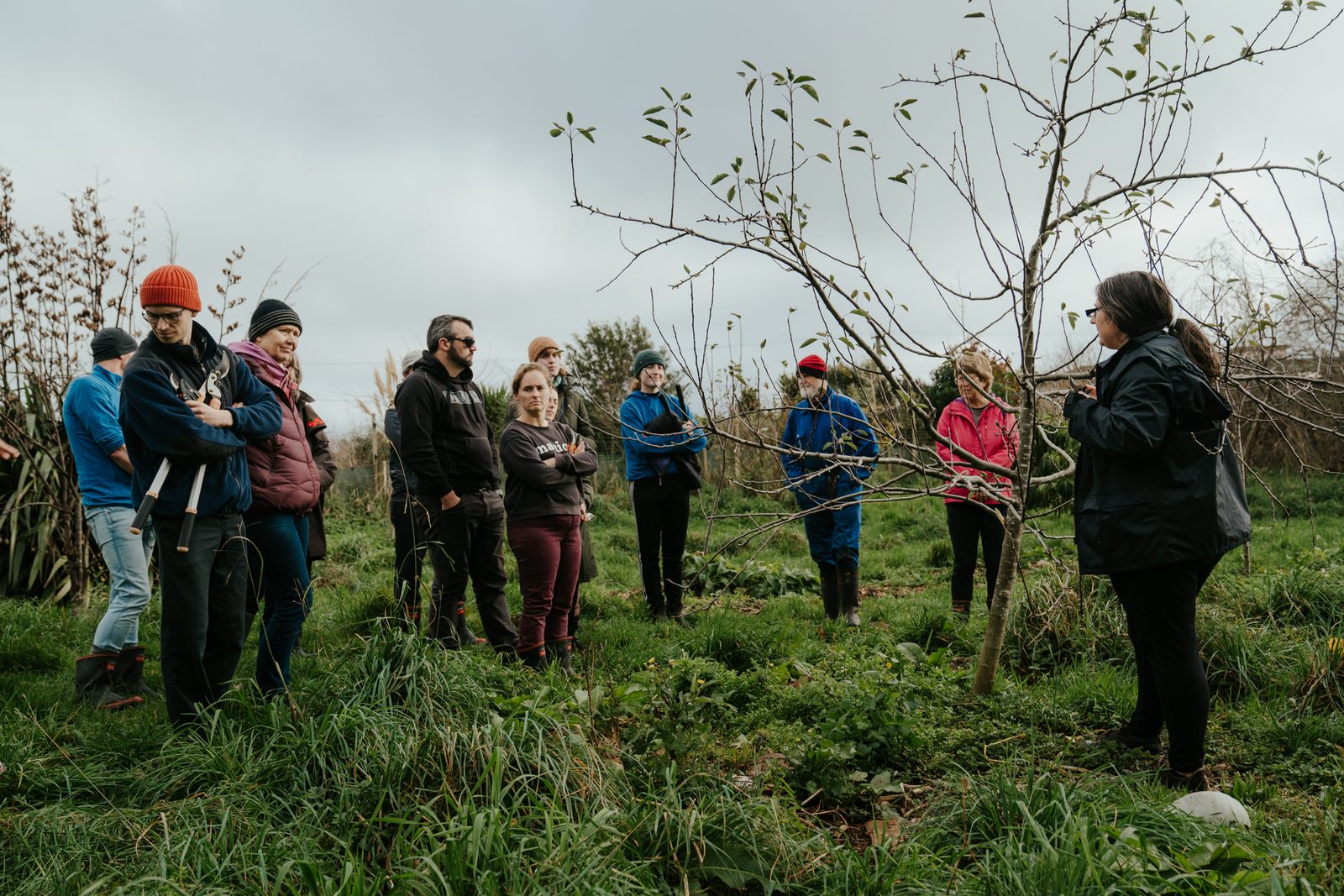
Hannah, our orchardist, is a convert. Eric once made her a Korean-style acorn jelly, and she has not forgotten it. “It’s one of the best foods I’ve ever tasted,” she says. “I still dream of that acorn jelly.” Which is why, sometime in the next year, we want to run a free public workshop on the farm — how to gather, leach and cook with acorns, using the oaks already growing here.
The oaks coming to the trail
Oaks are not native to Aotearoa — British and European settlers carried them here through the 1800s and 1900s. The English oak, Quercus robur, took to our damp climate happily and crops heavily; all told, something like 140 oak species now grow in the country. Every one of them, Eric says, produces an edible acorn once the tannins are gone.
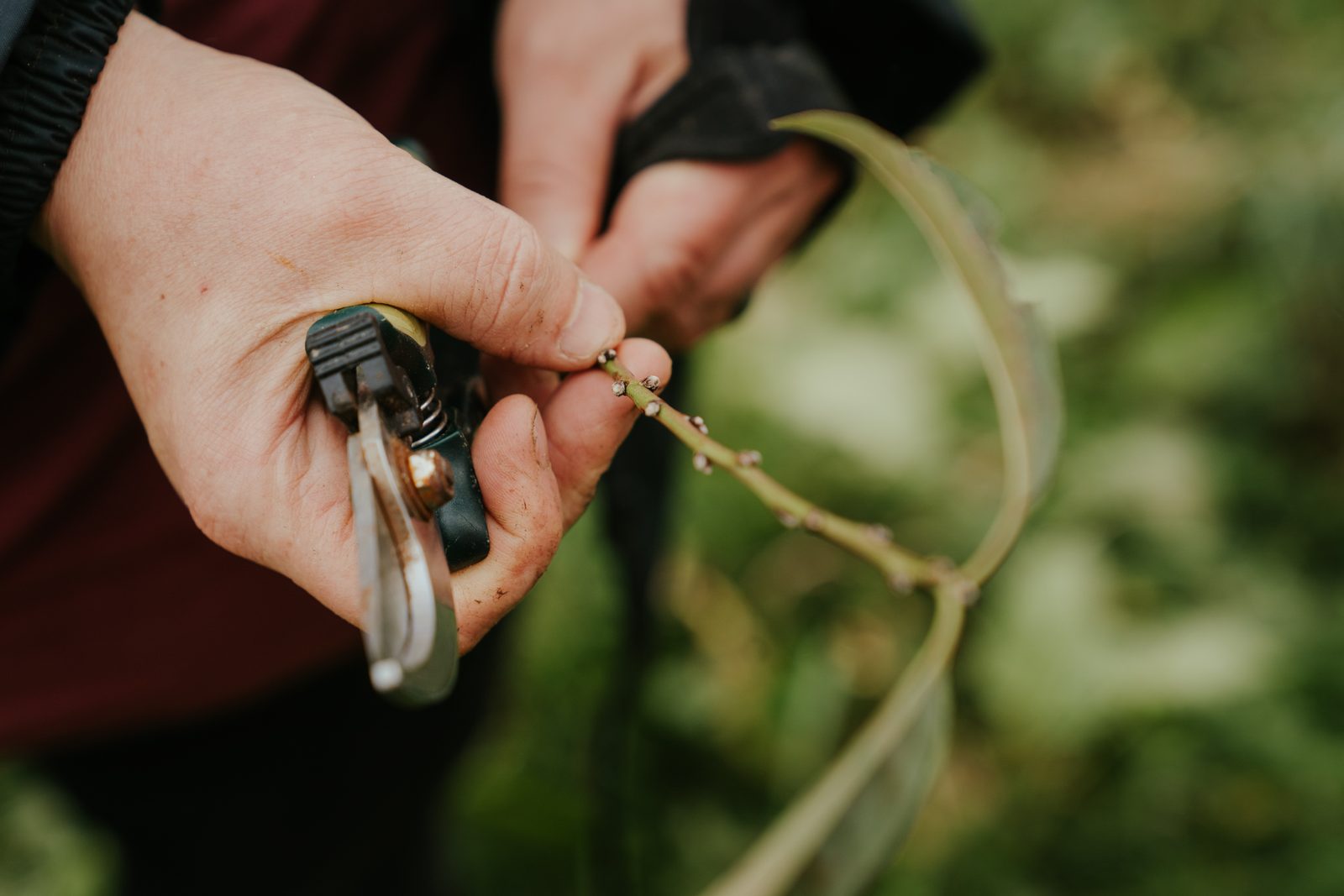
For the trail, Eric has drawn up a shortlist of the best croppers and the biggest nuts — holm oak, Turkey oak, a burr oak hybrid, the Mexican royal oak and others — with the English and Turkey oaks expected to carry most of the harvest. For six or seven years he has quietly been watching individual trees around the region for exceptionally large acorns, and those standouts will be grafted onto compatible rootstocks. He is planting a genetic mix of each species too, with seedlings among the grafts, so the trees pollinate one another well.
Two harvests from one tree
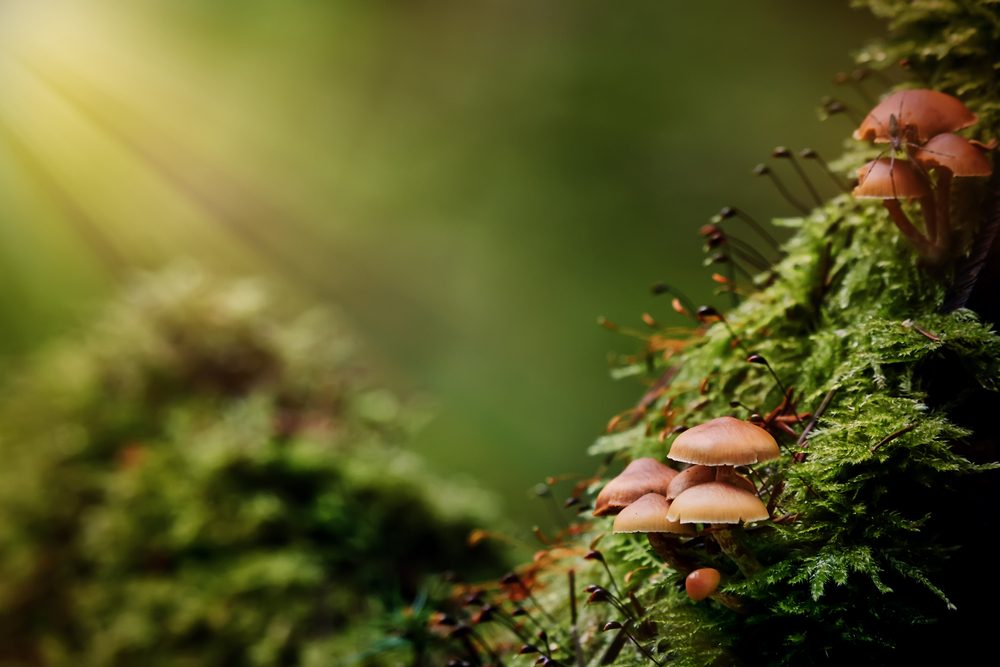
Here is where it gets clever. Eric intends to inoculate every oak on the trail with porcini — one of the world’s great edible mushrooms, and something close to unheard-of in this valley. If it takes (and he is honest that it is harder than it sounds), the same trees that give us acorns will also, in season, push up porcini at their feet.
He is bringing Korean pine too — Pinus koraiensis, which conveniently drops its cones to the ground when the nuts are ripe — and inoculating the seedlings with saffron milk cap, another favourite mushroom that is new to the area.
That is the whole philosophy of the loop in a single tree. “The more purpose a tree has, the better,” as the thinking goes on the farm. A tree that gives food from its branches and food from its roots, shelter and habitat besides, is worth far more than a tree that does just one thing. Every species we plant, we try to make earn its place several times over.
Foraging, made legal and generous
Eric is careful about what a trail like this really means. Foraging — scrumping, if you like the old word for helping yourself to fruit from a tree — is having a quiet revival. But the places you can legally do it, especially for good protein and carbohydrate and fat, are shrinking fast.
“The idea of a foraging trail, with food and medicinals publicly accessible in every season, is not to be taken lightly,” he says. “I’m honoured to be able to contribute to the range of plants and edible fungi along it.” That is exactly what the Fruit & Forage Loop is for: a place where anyone can walk, learn a tree by name, and reach out and be handed something to eat.
The round is live — come and plant it with us
This is the Fruit & Forage Loop: our existing farm loop, remade as a living trail of abundance — a hundred fruit and nut trees, a heritage nursery, oaks and pines you can eat from, medicinal and native species — three kilometres from the Farm Shop to a lookout over the valley.
We are raising $15,000 through the Ma Earth Round 3 funding round to plant it — and as of today, the round is live. Ma Earth runs on quadratic funding: the matching pool — drawn from the Biome Trust and the Naia Trust, and shared across more than 200 nature-regeneration projects — is divided not by who gives the most, but by how many people give at all. So the number that matters most to us is not dollars. It is people.
Give anything — even $5 — and verify your email when Ma Earth asks, because verification is what unlocks the match, often five to ten times over. Donations are open now and close on Monday 21 July.
Back the Fruit & Forage Loop at the Ma Earth page here — and help us bring the acorn, and the oak that carries it, home.
#alwaysbeplanting